
Understanding Anxiety: 7 Ways to Find Relief and Peace

Understanding Anxiety: 7 Ways to Find Relief and Peace

HOPE-FULL WELLNESS

Understanding Anxiety

7 Researched Ways to Find Relief and Peace

What anxiety is, what Scripture says about it, and practical, research-backed ways to find relief and peace.

About 1 in 5 U.S. adults had an anxiety disorder in the past year. About 1 in 3 will have one at some point in their lives (National Institute of Mental Health, n.d.). Among adults with an anxiety disorder, nearly 1 in 4 (22.8%) had serious impairment in daily functioning (National Institute of Mental Health, n.d.). These figures come from national diagnostic interviews conducted in 2001 to 2003.

In 2024, 19.3% of U.S. adults, about 1 in 5, took prescription medication in the past 12 months for their mental health (Briones & Villarroel, 2026, NCHS Data Brief). That measure is broader than anxiety alone. In 2023 national survey data, 60.4% of adults with a history of diagnosed anxiety were currently taking prescription medication for anxiety (Gao et al., 2026, Frontiers in Public Health). Decisions about medication belong between you and your healthcare provider.

The good news is that there are practical ways to help. Research points to simple ones you can start today, and Scripture offers a path of peace for people of faith. Understanding anxiety is the first step.

What Anxiety Is and Why It Matters

Anxiety is the mind and body’s natural response to stress, uncertainty, or perceived danger. It can show up as racing thoughts, tension, restlessness, and difficulty concentrating. In small amounts, it can be useful, alerting you to a real concern.

Feeling anxious from time to time is normal. The trouble begins when the alarm will not switch off and anxiety becomes persistent or overwhelming, interfering with daily life and peace.

What Is Happening in Your Body and Mind

When your brain perceives a threat, a small region called the hypothalamus sets off an alarm. Signals travel to the adrenal glands, which release adrenaline and cortisol. Adrenaline makes your heart beat faster and raises your blood pressure. Cortisol increases the sugar in your bloodstream for energy to respond. This same alarm system also communicates with the brain regions that control mood and motivation (Mayo Clinic Staff, 2026).

The system is meant to be temporary. The trouble begins when your mind keeps signaling danger and the alarm stays on. That is why anxiety is a whole-body response, and why calming the body and steadying the mind both matter.

How It Shows Up in Everyday Life

Anxiety looks different from person to person. Common signs include:

  • Racing or repeating thoughts
  • Muscle tension or a tight chest
  • Restlessness
  • Difficulty concentrating
  • Trouble sleeping
  • A strong need to know what will happen next

Anxiety can also say you must solve everything right now, or pull your attention toward the worst possible outcome. Recognizing these messages as anxiety, not fact, is a first step.

Sometimes anxiety calls for extra support. Only a qualified health professional can diagnose an anxiety disorder. If anxiety is causing problems in everyday life, such as at work or with family and friends, it is time to seek professional help (National Institute of Mental Health, 2025).

How Anxiety Affects Long-Term Health

Anxiety is linked to long-term physical health: when the body’s stress alarm stays on, long-term activation is linked to a higher risk of heart disease, high blood pressure, stroke, sleep problems, and trouble with memory and focus (Mayo Clinic Staff, 2026). A meta-analysis of 46 cohort studies found anxiety associated with a higher risk of cardiovascular death, coronary heart disease, stroke, and heart failure, though whether the link is causal is unclear (Emdin et al., 2016, American Journal of Cardiology).

None of this means these outcomes are inevitable. Anxiety deserves to be taken seriously, and treatment, such as talk therapy, medication, or both, is chosen with a health care provider (National Institute of Mental Health, 2025).

How Anxiety Affects Relationships

Anxiety rarely stays contained to one person. A meta-analysis of 151 effects found that higher marital quality was associated with lower anxiety, as were more positive behaviors, such as communication and intimacy, and fewer negative ones, such as criticism (Postler et al., 2022, Family Process).

These are associations, and the link may run both ways.

What Scripture Says About Anxiety

For many people, anxiety is not only a physical or emotional experience. It is a spiritual one. Scripture speaks to it directly, and it does so without shame. In Philippians 4:4–9, the apostle Paul does not tell readers to pretend anxiety is not there. He gives them a response:

“In nothing be anxious, but in everything, by prayer and petition with thanksgiving, let your requests be made known to God. And the peace of God, which surpasses all understanding, will guard your hearts and your thoughts in Christ Jesus” (Philippians 4:6–7, World English Bible, American English Edition).

The passage offers a pattern. Turn toward God. Bring Him your requests, with thanksgiving. Direct your thoughts toward whatever is true, honorable, and lovely. Then put it into practice. It describes God’s peace guarding your heart and thoughts, even while circumstances remain unresolved. Prayer does not require perfect words. It is simply talking to God honestly about what you are carrying.

Research has explored this connection. In one trial of 83 people with frequent migraines, those taught spiritual meditation, practiced 20 minutes a day for a month, had greater drops in anxiety than those taught secular meditation or muscle relaxation (Wachholtz & Pargament, 2008, Journal of Behavioral Medicine). That was a small study in a specific group. A review of 23 randomized trials found that religious and spiritual interventions were associated with lower anxiety symptoms, although the researchers noted that more and higher-quality trials are needed (Gonçalves et al., 2015, Psychological Medicine).

Research can describe what helps. For people of faith, Scripture points to where peace comes from.

7 Holistic Ways to Address Anxiety

Prayer and meditating on Scripture are one helpful means. Research supports several simple practices you can add alongside them. No single practice removes anxiety, so consider each one a tool in your toolbox.

  1. Meditation. In a randomized trial of 276 adults with a diagnosed anxiety disorder, an 8-week mindfulness-based stress reduction course was noninferior to the antidepressant escitalopram at reducing anxiety severity (Hoge et al., 2023, JAMA Psychiatry). If you take medication, talk with your prescriber before changing anything.
  2. Yoga. In a 12-week trial of 226 adults with generalized anxiety disorder, both Kundalini yoga and cognitive behavioral therapy (CBT) were more effective than stress education. A noninferiority test did not show yoga to be as effective as CBT, which remains a first-line treatment (Simon et al., 2021, JAMA Psychiatry).
  3. Exercise. A 2024 review of randomized trials of walking in adults found that, across 26 trials measuring anxiety symptoms, walking was associated with lower anxiety than inactive comparison groups (Xu et al., 2024, JMIR Public Health and Surveillance).
  4. A nutrient-rich diet. A systematic review of 104 studies found that Mediterranean-style eating, which emphasizes vegetables, fruits, whole grains, legumes, nuts, and fish, was associated with fewer depressive and anxiety symptoms and lower perceived stress. Most studies were observational, and the authors call for more research on cause and effect (Kabthymer et al., 2026, Nutrition Research Reviews).
  5. A social support network. A 2018 systematic review of 34 longitudinal studies found substantial evidence that people with depression who felt less supported had worse outcomes, and preliminary evidence of similar associations in anxiety disorders (Wang et al., 2018, BMC Psychiatry). Tell someone you trust what you are carrying, and ask them to pray with you.
  6. Slow breathing. A 2023 meta-analysis of randomized trials found that breathwork was associated with lower stress and lower anxiety than control conditions. The authors urged caution because most studies had a moderate risk of bias (Fincham et al., 2023, Scientific Reports).
  7. Expressive writing. A meta-analysis of 146 randomized studies of experimental disclosure, such as expressive writing about personal and stressful experiences, found a small but significant average benefit for health and psychological outcomes (Frattaroli, 2006, Psychological Bulletin). That is structured writing about a meaningful experience, not general journaling.

Think of these as helpful means, not the answer. NIMH notes that stress management techniques such as exercise, mindfulness, and meditation can reduce anxiety symptoms and enhance the effects of psychotherapy, and that a healthy lifestyle alone cannot replace treatment (National Institute of Mental Health, 2025). Each helps ease stress, which Mayo Clinic links to anxiety when the stress response stays on (Mayo Clinic Staff, 2026). The evidence varies by practice, and several findings are associations rather than proof of cause. Use them alongside professional care when anxiety is persistent.

Putting It Into Practice

The next time anxiety rises, try this simple four-part reset:

  1. Pause and name it. Put what you are feeling into words, out loud or on paper. For example: “I am anxious about tomorrow’s meeting.”
  2. Slow your breathing. Breathe slowly and comfortably for a few minutes. Let each exhale be a little longer than the inhale.
  3. Ask what is true right now. Separate what you know from what might happen. Then ask what you can control.
  4. Take one small step. Take a ten-minute walk, write three lines in a journal, call someone you trust, or pray aloud. If faith is part of your life, read Philippians 4:6–7 out loud.

Anxiety may return, and that does not erase what you have practiced. If you are struggling or having thoughts of suicide, call or text 988 in the U.S. to reach the 988 Suicide & Crisis Lifeline. In life-threatening situations, call 911.

Helpful Resources

A Hope-Full Wellness Resource

If you would like a guided way to practice these steps, our Let the Light Shine on Anxiety Scripture study is an interactive digital download built around Philippians 4:4–9. It guides you through reading, prayer, reflection, journaling, and one small action step, with a one-page Anxiety Reset card.

Conclusion

Anxiety is not a personal failure. It is your body and mind responding to stress, uncertainty, or perceived danger, and it can touch your relationships and long-term health. Scripture invites you to bring it to God in prayer, and research points to practical ways to ease stress and anxiety, from meditation and exercise to nourishing food and people who support you.

You do not have to fix everything today. Choose one small step, and reach out for professional support when anxiety is persistent or overwhelming.

Sources

  1. National Institute of Mental Health. (n.d.). Any anxiety disorder. https://www.nimh.nih.gov/health/statistics/any-anxiety-disorder
  2. Briones, E. M., & Villarroel, M. A. (2026). Mental health treatment among adults: United States, 2024 (NCHS Data Brief No. 564). National Center for Health Statistics. https://www.cdc.gov/nchs/products/databriefs/db564.htm
  3. Gao, J., Idris, M. A., Kim-Vences, S. I. H., & Windett, J. H. (2026). Patterns and predictors of anxiety medication use among United States adults: A national analysis with a focus on racial disparities in the Asian population. Frontiers in Public Health, 14, Article 1803386. https://doi.org/10.3389/fpubh.2026.1803386
  4. Mayo Clinic Staff. (2026, July 21). Chronic stress puts your health at risk. Mayo Clinic. https://www.mayoclinic.org/healthy-lifestyle/stress-management/in-depth/stress/art-20046037
  5. National Institute of Mental Health. (2025). Generalized anxiety disorder: What you need to know. https://www.nimh.nih.gov/health/publications/generalized-anxiety-disorder-gad
  6. Postler, K. B., Helms, H. M., & Anastopoulos, A. D. (2022). Examining the linkages between marital quality and anxiety: A meta-analytic review. Family Process, 61, 1456–1472. https://doi.org/10.1111/famp.12798
  7. Emdin, C. A., Odutayo, A., Wong, C. X., Tran, J., Hsiao, A. J., & Hunn, B. H. M. (2016). Meta-analysis of anxiety as a risk factor for cardiovascular disease. American Journal of Cardiology, 118(4), 511–519. https://doi.org/10.1016/j.amjcard.2016.05.041
  8. Wachholtz, A. B., & Pargament, K. I. (2008). Migraines and meditation: Does spirituality matter? Journal of Behavioral Medicine, 31(4), 351–366. https://doi.org/10.1007/s10865-008-9159-2
  9. Gonçalves, J. P. B., Lucchetti, G., Menezes, P. R., & Vallada, H. (2015). Religious and spiritual interventions in mental health care: A systematic review and meta-analysis of randomized controlled clinical trials. Psychological Medicine, 45(14), 2937–2949. https://doi.org/10.1017/S0033291715001166
  10. Hoge, E. A., Bui, E., Mete, M., Dutton, M. A., Baker, A. W., & Simon, N. M. (2023). Mindfulness-based stress reduction vs escitalopram for the treatment of adults with anxiety disorders: A randomized clinical trial. JAMA Psychiatry, 80(1), 13–21. https://doi.org/10.1001/jamapsychiatry.2022.3679
  11. Simon, N. M., Hofmann, S. G., Rosenfield, D., Hoeppner, S. S., Hoge, E. A., Bui, E., & Khalsa, S. B. S. (2021). Efficacy of yoga vs cognitive behavioral therapy vs stress education for the treatment of generalized anxiety disorder: A randomized clinical trial. JAMA Psychiatry, 78(1), 13–20. https://doi.org/10.1001/jamapsychiatry.2020.2496
  12. Xu, Z., Zheng, X., Ding, H., Zhang, D., Cheung, P. M.-H., Yang, Z., Tam, K. W., Zhou, W., Chan, D. C.-C., Wang, W., & Wong, S. Y.-S. (2024). The effect of walking on depressive and anxiety symptoms: Systematic review and meta-analysis. JMIR Public Health and Surveillance, 10, e48355. https://doi.org/10.2196/48355
  13. Kabthymer, R. H., Karimi, L., Livesay, K., Lee, M., Apostolopoulos, V., Millar, R., McKay, S., Barry, S., Castañer Niño, O., Fitó Colomer, M., Soultanakis, H., Conduit, R., Takac, M., Mizzi, S., Sidossis, L. S., Tierney, A., Itsiopoulos, C., Feehan, J., & de Courten, B. (2026). Effect of Mediterranean diet on mental health outcomes: A systematic review. Nutrition Research Reviews, 39, Article e9. https://doi.org/10.1017/S0954422425100243
  14. Wang, J., Mann, F., Lloyd-Evans, B., Ma, R., & Johnson, S. (2018). Associations between loneliness and perceived social support and outcomes of mental health problems: A systematic review. BMC Psychiatry, 18, Article 156. https://doi.org/10.1186/s12888-018-1736-5
  15. Fincham, G. W., Strauss, C., Montero-Marin, J., & Cavanagh, K. (2023). Effect of breathwork on stress and mental health: A meta-analysis of randomised-controlled trials. Scientific Reports, 13, Article 432. https://doi.org/10.1038/s41598-022-27247-y
  16. Frattaroli, J. (2006). Experimental disclosure and its moderators: A meta-analysis. Psychological Bulletin, 132(6), 823–865. https://doi.org/10.1037/0033-2909.132.6.823
The Inflammation Connection

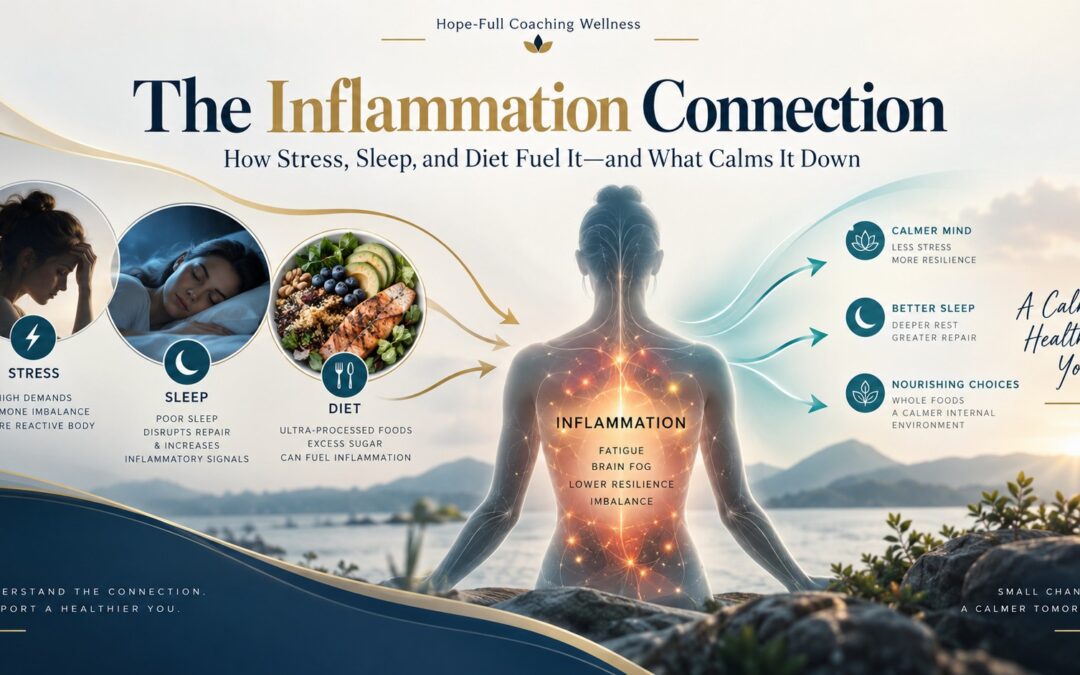
The Inflammation Connection

The Inflammation Connection

How Stress, Sleep, and Diet Fuel It

You've probably heard "inflammation" used as a kind of catch-all villain in wellness conversations—something to fight, reduce, or eliminate. But inflammation isn't actually the enemy. It's one of the most important things your body does. The real trouble starts when inflammation forgets how to turn off. The same protective response meant for a short-term threat gets triggered again and again—by ongoing stress, poor sleep, or a diet heavy in sugar and processed foods—until your body is running a low, constant simmer you can't always feel but that wears on you anyway. Understanding what's driving that simmer changes how you think about food, rest, and the daily choices that either feed it or help it settle.

What Inflammation Really Is (And Why It's Not the Enemy)

When you sprain an ankle or catch a cold, your immune system responds with acute inflammation—the redness, swelling, heat, and soreness that show up around an injury or infection. It's uncomfortable, but it's also your body's repair crew arriving on scene: blood flow increases, immune cells move in, damaged tissue gets cleared away, and healing begins. Once the threat is handled, a healthy immune system stands down and inflammation resolves.

Chronic, low-grade inflammation works differently. Instead of switching off once the job is done, the immune system stays partially activated—circulating low levels of inflammatory signals for months or even years. You typically can't feel it the way you feel a sprained ankle. It shows up quietly, in the background, and it's been linked to a long list of common health concerns when it persists over time.

What's Driving It: Stress, Sleep, and Diet

Your body's stress response is designed to be temporary. In a short-term stressful moment, cortisol actually helps rein inflammation in once the threat passes—it's part of the built-in "off switch." The problem is what happens when stress doesn't let up. Under chronic stress, immune cells can become less responsive to cortisol's anti-inflammatory signal, a pattern researchers call glucocorticoid resistance. One study comparing highly stressed caregivers of children with cancer to parents of healthy children found that the more distressed group had a blunted cortisol rhythm and immune cells that were measurably less able to respond to the hormone's anti-inflammatory signal (Miller, Cohen, & Ritchey, 2002, Health Psychology).

There's a second brake on inflammation, and it runs through your nervous system rather than your hormones. The vagus nerve—the main highway of your parasympathetic ("rest and digest") system—helps regulate immune activity through what researchers call the cholinergic anti-inflammatory pathway. Heart rate variability (HRV) describes variation in the time between heartbeats; some HRV measures are used as indices of cardiac vagal regulation, and lower HRV has been associated with higher circulating levels of inflammatory markers (Cooper et al., 2015, Brain, Behavior, and Immunity). In plain terms: patterns of lower vagally mediated HRV tend to track with higher inflammatory activity.

Sleep adds a third layer. In a recent meta-analysis pooling data from 35 studies, researchers found that a single rough night didn't move inflammatory markers much, but multiple nights of restricted sleep reliably raised both interleukin-6 and C-reactive protein—two of the most studied inflammation markers in the blood (Ballesio, Fiori, & Lombardo, 2026, Journal of Sleep Research).

Diet plays a major role, too—separate from stress and sleep, but no less significant. Diets high in ultra-processed foods and added sugar have been associated with markers of low-grade inflammation, although the evidence is stronger for overall dietary patterns than for sugar in isolation. In a large, nationally representative U.S. sample, adults who got the most calories from ultra-processed foods had significantly higher levels of high-sensitivity C-reactive protein (hs-CRP) than those who ate the least (Sajan et al., 2025, American Journal of Medicine). In a randomized crossover trial, healthy young men consumed low-to-moderate amounts of sugar-sweetened beverages for three weeks at a time. hs-CRP increased during the study periods, but it also rose during the low-fructose comparison condition, so the trial did not isolate sugar as the sole cause of the change (Aeberli et al., 2011, American Journal of Clinical Nutrition). None of this means an occasional treat is dangerous—it's the overall pattern, not any single food, that matters.

What Ongoing Stress and Inflammation Can Feel Like

None of these are dramatic on their own—but together, especially during high-stress stretches, they're worth reading as signals rather than inconveniences to push through:

  • Fatigue that doesn't improve much with rest, even after a full night's sleep
  • Aches, stiffness, or muscle tension with no clear injury behind it
  • A foggy, hard-to-focus feeling that comes and goes
  • Getting run down easily or catching every bug that goes around
  • Skin flare-ups that seem to track your stress level more than anything you ate
  • Digestive upset—bloating, an unsettled stomach—during especially demanding stretches
  • Feeling "tired but wired" at night, like your body won't fully power down

These symptoms are not specific to inflammation and can have many causes, but persistent changes are worth paying attention to and discussing with a healthcare professional.

What You Can Do

The goal is not to chase inflammation itself, but to support the everyday systems that help your body regulate stress, recover, and return to balance.

  • Protect consistent sleep, not just enough sleep. The research above suggests that repeated short nights can increase inflammatory activity, making a regular sleep routine an important part of recovery.
  • Build in a daily nervous-system downshift. In a randomized trial, stressed, unemployed adults who completed a three-day mindfulness meditation program had lower circulating interleukin-6 four months later than a comparison group who did relaxation training without the mindfulness component (Creswell et al., 2016, Biological Psychiatry). You don't need a retreat—a short daily breathing or mindfulness practice is a realistic place to start.
  • Rethink your plate, not just your plan. Dietary patterns heavy in ultra-processed foods and sugary drinks have been associated with higher inflammatory markers, while diets built around whole foods, vegetables, and fiber tend to run the other direction. Small, sustainable swaps—more whole foods, fewer sugary drinks and packaged snacks—add up more than any single overhaul.
  • Move gently and consistently. Regular physical activity supports overall health, stress regulation, sleep, and metabolic health. It does not have to be intense to count.
  • Notice "tired but wired" days and build in an actual pause. Not just pushing through until you collapse at the end of the day.

Putting It Into Practice: A Simple Daily Reset

You don't need to overhaul your life to start interrupting this cycle—you need one small, repeatable moment that tells your nervous system it's safe to stand down. Pick a consistent time each day (many people find right after lunch or right before dinner works well) and give yourself two to three minutes: slow your breathing down on purpose, engage one calming sense—a scent, a texture, a sound—and let your shoulders drop. It won't undo months of stress in one sitting, but done consistently, it builds the kind of consistent calming practice that can support nervous-system regulation over time.

Helpful Resources

A Hope-Full Wellness Resource

Want a simple, repeatable way to build that daily pause into your day? Our Ocean Visualization – Meditation pairs a guided ocean visualization with a breathing exercise, affirmations, and ocean-wave audio—a multi-sensory reset designed to help you create a deliberate pause and support your body's shift out of high-stress mode.

Conclusion

Inflammation isn't something to fear—it's a sign your body is trying to protect you. The goal isn't to eliminate it; it's to help your body remember how to turn it back off. Sleep, a steadier diet, and small nervous-system downshifts won't fix everything overnight, but they speak directly to the biology behind chronic, low-grade inflammation. Small, repeatable choices—on your plate and off it—can help create the conditions your body needs for better regulation, recovery, and long-term wellness.

Sources

Miller, G. E., Cohen, S., & Ritchey, A. K. (2002). Chronic psychological stress and the regulation of pro-inflammatory cytokines: A glucocorticoid-resistance model. Health Psychology, 21(6), 531–541. https://doi.org/10.1037/0278-6133.21.6.531

Cooper, T. M., McKinley, P. S., Seeman, T. E., Choo, T.-H., Lee, S., & Sloan, R. P. (2015). Heart rate variability predicts levels of inflammatory markers: Evidence for the vagal anti-inflammatory pathway. Brain, Behavior, and Immunity, 49, 94–100. https://doi.org/10.1016/j.bbi.2014.12.017

Ballesio, A., Fiori, V., & Lombardo, C. (2026). Effects of experimental sleep deprivation on peripheral inflammation: An updated meta-analysis of human studies. Journal of Sleep Research, 35(1), e70099. https://doi.org/10.1111/jsr.70099

Sajan, K., Anthireddy, N., Matarazzo, A., Furtado, C., Hennekens, C. H., & Ferris, A. (2025). Ultra-processed foods and increased high sensitivity C-reactive protein. American Journal of Medicine, 138(12), 1742–1745. https://doi.org/10.1016/j.amjmed.2025.08.016

Aeberli, I., Gerber, P. A., Hochuli, M., Kohler, S., Haile, S. R., Gouni-Berthold, I., Berthold, H. K., Spinas, G. A., & Berneis, K. (2011). Low to moderate sugar-sweetened beverage consumption impairs glucose and lipid metabolism and promotes inflammation in healthy young men: A randomized controlled trial. American Journal of Clinical Nutrition, 94(2), 479–485. https://doi.org/10.3945/ajcn.111.013540

Creswell, J. D., Taren, A. A., Lindsay, E. K., Greco, C. M., Gianaros, P. J., Fairgrieve, A., Marsland, A. L., Brown, K. W., Way, B. M., Rosen, R. K., & Ferris, J. L. (2016). Alterations in resting-state functional connectivity link mindfulness meditation with reduced interleukin-6: A randomized controlled trial. Biological Psychiatry, 80(1), 53–61. https://doi.org/10.1016/j.biopsych.2016.01.008

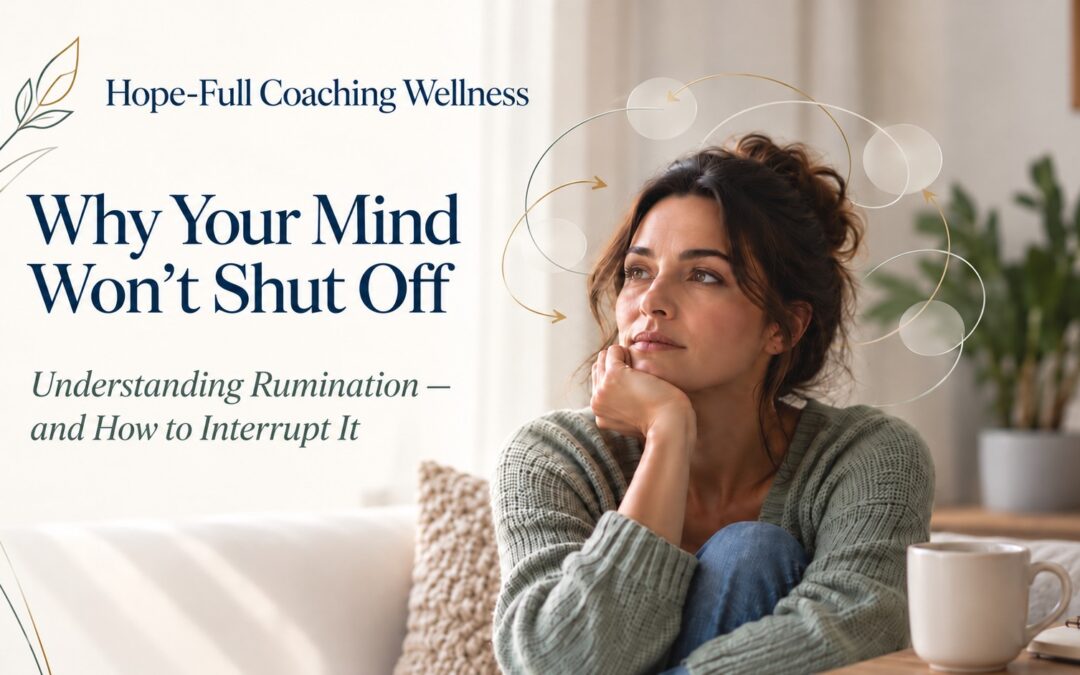
Why Your Mind Gets Stuck on Repeat

Why Your Mind Gets Stuck on Repeat

Understanding Rumination - Why Your Mind Won't Shut Off
HOPE-FULL WELLNESS

Why Your Mind Gets Stuck on Repeat

Understanding Rumination — and How to Interrupt It

You know the feeling: it's midnight, the conversation from three days ago is playing on a loop, and no amount of telling yourself "just stop thinking about it" makes it stop. Your body is tired but your mind is wide awake, replaying the same scene, the same words, the same "I should have said" — over and over, without ever arriving anywhere new.

That's rumination. And if it feels less like thinking and more like being stuck, that's because, physiologically, you are.

What It Is — and Why It Matters

Rumination is repetitive, passive dwelling on a distressing thought, feeling, or event — focusing again and again on what happened, why it happened, and what it means, without moving toward resolution (Nolen-Hoeksema, 1991, Journal of Abnormal Psychology). It's easy to confuse with problem-solving, because it feels productive in the moment. But problem-solving moves forward. Rumination circles.

This distinction matters more than it might seem. Decades of research link rumination to the onset of depressive and anxious episodes, and to how much they intensify once they start — it exacerbates negative thinking, impairs problem-solving, and erodes the social support that would otherwise help someone move through a hard stretch (Nolen-Hoeksema, Wisco, & Lyubomirsky, 2008, Perspectives on Psychological Science). Researchers now treat repetitive negative thinking — the umbrella term covering both rumination and its future-oriented counterpart — as a shared mechanism underneath much of anxiety and depressive experience, rather than a symptom that belongs to one or the other (Ehring & Watkins, 2008, International Journal of Cognitive Therapy). In other words: learning to work with rumination isn't a niche skill. It's a foundational one.

What's Happening in the Mind or Body

Rumination isn't a character flaw or a failure of willpower — it has a recognizable footprint in the brain. Neuroimaging research points to the default mode network (DMN), a set of brain regions that becomes active when you're not focused on an external task — the same network involved in self-reflection, memory, and mind-wandering.

During rumination, connectivity within specific DMN subsystems shifts: regions tied to self-referential thought and emotional appraisal become more tightly coupled, while their connection to broader information-processing regions loosens (Chen et al., 2020, NeuroImage). Put simply, the brain narrows its focus inward and gets harder to redirect — which is part of why "just stop thinking about it" is such unhelpful advice. You're not simply dealing with a lack of willpower. In that moment, your attention has become organized around the loop, which can make redirecting it genuinely difficult.

There's also a real physiological cost. According to the perseverative cognition hypothesis, replaying a stressful event in your mind can prolong the body's stress response well after the original trigger has passed — your nervous system responds to the replayed thought almost as if the event were happening again (Brosschot, Gerin, & Thayer, 2006, Journal of Psychosomatic Research).

And the cost isn't only physical: higher levels of repetitive negative thinking are also linked to worse depression and anxiety outcomes during structured treatment, even after accounting for how severe symptoms were to begin with (Kertz, Koran, Stevens, & Björgvinsson, 2015, Behaviour Research and Therapy).

How It Shows Up in Everyday Life

Rumination rarely announces itself as "rumination." It shows up as:

  • Replaying a conversation or interaction, searching for the moment you could have said something different
  • Lying awake replaying something that happened earlier and repeatedly wondering what you should have done differently
  • Feeling like you're "processing" something, but noticing you feel worse, not clearer, afterward
  • Getting stuck on a mistake at work long after it's been addressed
  • A vague sense of dread or tension that doesn't seem to lead anywhere — no plan, no next step, just more thinking
  • Difficulty being present with other people because part of your mind is still back in the loop

The common thread is motion without progress. You're doing something that resembles thinking, but the thinking isn't taking you anywhere — it's just widening the same groove.

What You Can Do

The goal isn't to eliminate reflection — thinking things through is valuable and necessary. The goal is to recognize when reflection has tipped into rumination, and have a way to interrupt it.

  • Name it. The simplest shift is often the most effective: notice when you've crossed from "figuring something out" into "replaying it." A useful test — are you generating a next step, or just generating more thoughts? If it's the latter, you've likely slipped into the loop.
  • Give it a container. Rather than trying to suppress the thought (which tends to backfire), set aside a specific, limited window — ten minutes, later in the day — to actually think about it. This doesn't banish the thought; it gives your mind permission to postpone it, which is often enough to loosen its grip in the moment.
  • Interrupt with your senses, not your willpower. Because rumination is sustained by inward-focused attention, shifting your attention outward — through a physical sensation, a change of environment, or a brief burst of movement — helps redirect attention away from the inward-focused loop. This is part of why a short walk, a change of room, or a cold glass of water can genuinely help; it's not a distraction from the problem, it's a disruption of the neural pattern sustaining it.
  • Build an attention-training practice. This doesn't need to be elaborate. In a meta-analysis of 19 randomized trials in people with depression, brief, regular mindfulness practice meaningfully reduced rumination levels, alongside measurable improvements in mood and anxiety (Li et al., 2022, International Journal of Environmental Research and Public Health). The mechanism is straightforward: mindfulness practice is, in essence, repeated training in noticing when attention has wandered inward and gently redirecting it — which is exactly the skill rumination requires.
  • Externalize it. Writing the thought down — even briefly, even messily — moves it from an internal loop to something outside yourself that you can look at, rather than live inside of.

Putting It Into Practice

You don't need to catch every ruminative thought the moment it starts. That's not realistic, and it isn't the goal. What helps is building a small, repeatable pattern: notice the loop, name it as rumination rather than problem-solving, and choose one interruption — a sensory shift, a scheduled thinking window, a few lines in a journal, a few minutes of focused breath. Over time, this is less about willpower and more about practice — teaching your attention a different, more flexible habit than the one it currently defaults to.

Progress here doesn't look like never ruminating again. It looks like noticing sooner, and having somewhere to go once you do.

Helpful Resources

A Hope-Full Wellness Resource

When your mind gets stuck replaying the same thought or conversation, trying to think your way out of it often keeps the loop going. Our Calm Reset System takes a different approach. It gives you practical, hands-on ways to interrupt the pattern, shift your attention, and let your mind and body actually reset. You'll find it on our shop page.

Conclusion

A mind that gets stuck on repeat isn't simply failing to stop thinking — it's caught in an attention pattern that can be difficult to redirect. You can't force it out of the loop by willpower alone, but you can teach it, gradually, to break the cycle by redirection. Start small: notice one loop today, and practice just one interruption or sensory shift.

Sources

Nolen-Hoeksema, S. (1991). Responses to depression and their effects on the duration of depressive episodes. Journal of Abnormal Psychology, 100(4), 569–582.

Nolen-Hoeksema, S., Wisco, B. E., & Lyubomirsky, S. (2008). Rethinking rumination. Perspectives on Psychological Science, 3(5), 400–424.

Ehring, T., & Watkins, E. R. (2008). Repetitive negative thinking as a transdiagnostic process. International Journal of Cognitive Therapy, 1(3), 192–205.

Chen, X., Chen, N.-X., Shen, Y.-Q., Li, H.-X., Li, L., Lu, B., Zhu, Z.-C., Fan, Z., & Yan, C.-G. (2020). The subsystem mechanism of default mode network underlying rumination: A reproducible neuroimaging study. NeuroImage.

Brosschot, J. F., Gerin, W., & Thayer, J. F. (2006). The perseverative cognition hypothesis: A review of worry, prolonged stress-related physiological activation, and health. Journal of Psychosomatic Research, 60(2), 113–124.

Kertz, S. J., Koran, J., Stevens, K. T., & Björgvinsson, T. (2015). Repetitive negative thinking predicts depression and anxiety symptom improvement during brief cognitive behavioral therapy. Behaviour Research and Therapy, 68, 54–63.

Li, P., Mao, L., Hu, M., Lu, Z., Yuan, X., Zhang, Y., & Hu, Z. (2022). Mindfulness on rumination in patients with depressive disorder: A systematic review and meta-analysis of randomized controlled trials. International Journal of Environmental Research and Public Health, 19(23), 16101.